
Personalization can boost spending by about 50%, yet many retailers still fail to deliver the right help at the right time. That mismatch shows up fast: customers get frustrated, churn rises, and word of mouth fades.
The good news is customer satisfaction is buildable. When you manage it step by step, you also improve loyalty and revenue.
In the sections below, you’ll follow a practical path: set clear goals, personalize touchpoints, run easy loyalty programs, use AI for faster support, close the feedback loop, and train your team for consistent wins.
Define What Happy Customers Mean for Your Business
“Happy customers” sounds nice, but it’s too fuzzy to run a business on. Instead, define it like a target on a dartboard. If you can measure it, you can improve it.
Start with outcomes you can control. For example, reduce complaints about shipping delays, speed up order fixes, or lower repeat contacts after a support case. Then write a simple customer happiness definition in one sentence.
Here’s an easy formula: Happy customers = customers get the outcome they came for, with minimal effort, and they trust your follow-through.
Next, assign owners. One person should own each part, like support speed or complaint reduction. Then set a review schedule. Quarterly reviews work well, because you need time to see patterns.
To make this real, use metrics that match the moment. Customer satisfaction isn’t one score. It’s a set of signals.
Below is a simple way to think about key metrics and what they tell you.
| Metric | What it measures | Why it matters |
|---|---|---|
| CSAT | Satisfaction after an interaction | Shows if your team solved the specific problem |
| NPS | Likelihood to recommend | Tracks long-term loyalty and brand trust |
| FCR | First contact resolution | Tells you if customers need to chase again |
| CES | Ease of effort | Captures friction, even when the outcome is “fine” |
| AHT | Average handling time | Helps you spot slow workflows, not just delays |
If you want a government-style approach to building CX metrics, review Identifying Your CX Metrics. It’s a clear example of how to pick measures that connect to results.
One more thing: share progress with your team and your customers. Post internal updates like, “FCR went up 6 points this month.” If you can, also share visible wins, like faster replacements for damaged items. People care when they see the work paying off.
Quick outcome-focused mindset for 2026
In 2026, more customers expect outcome-focused empathy. That means you respond with care, and you also fix the problem fast.
Pick the Right Metrics to Track Success
Once you define “happy,” the next step is picking the right metrics. Too many teams track everything. That makes the data noisy and the decisions weak.
Instead, choose a small set that covers the full support story: satisfaction, loyalty, effort, and time. Then set baselines before you change anything.
CSAT answers: “Did this help feel good?” Track it right after support resolves.
NPS answers: “Do people trust you enough to recommend?” Track it on a regular cadence.
FCR answers: “Did they have to repeat themselves?” Track it per channel and issue type.
CES answers: “Was it hard to get help?” Track it even when the outcome is correct.
AHT answers: “Did your team drag it out?” Track it, but never at the cost of quality.
You can run quick surveys with free tools like Google Forms. Then you’ll get consistent results without expensive software.
Here’s a simple metric baseline method that stays practical:
- Pick one month as your “starting point.”
- Track CSAT, NPS, FCR, CES, and AHT for that month.
- Break support results by channel (chat, email, phone) and by issue type.
- Write down the top two friction drivers.
Baselines do more than measure. They prevent guesswork. If your CES is high but CSAT is low, the problem might be “tone and clarity.” If FCR is low, the problem might be “missing info” or “handoff gaps.”
Also, don’t treat metrics like scorekeeping. Treat them like a map. If one metric moves, ask why. If none move, check whether your process changes actually reached the front line.
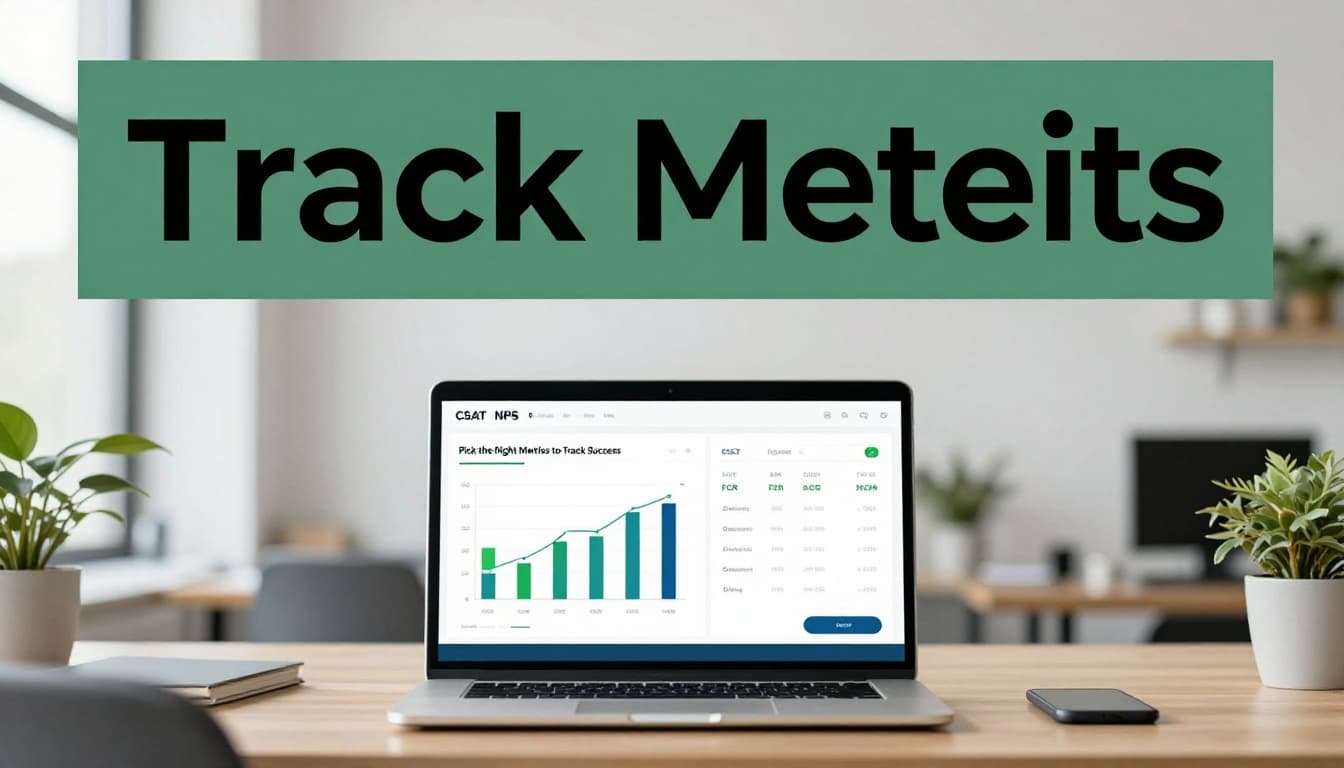
Caption: A clear metrics dashboard makes it easier to spot what’s working.
Personalize Interactions to Build Real Connections
Personalization isn’t about being fancy. It’s about reducing effort and improving relevance.
In 2026, shoppers still expect it. 80% prefer personalized brands, and they spend about 50% more when brands tailor offers. At the same time, many retailers miss the mark, especially with timing and irrelevant messages.
That’s where “real connections” start. Customers don’t want to feel tracked. They want to feel understood.
Use personal data ethically. Ask for permission. Explain why you want it. Then use it to improve outcomes, like faster recommendations or smarter help.
For ideas on what customers expect in 2026, check 2026 Personalization Trends. It’s a good reality check on what people actually notice.
What personalization looks like in plain terms
You can personalize without creepy tricks.
- Greet VIPs by name in email and in-app messages.
- Suggest products based on purchase history (for example, refills or accessories).
- Offer timing help, like shipping updates or replacement steps right when they matter.
- Give relevant support, so customers don’t repeat details.
Also, keep transparency front and center. If a customer sees that you used their purchase history to make a helpful suggestion, trust grows. If it feels random, trust drops.
A simple example you can copy
If someone buys coffee beans every month, offer a “same roast, new batch” suggestion near their usual reorder date. Then add a fast link to reorder. This doesn’t feel like marketing. It feels like help.
Gather and Use Customer Data Smartly
Personalization needs data. Yet the goal isn’t to collect everything. The goal is to collect enough, with consent, and then use it responsibly.
Start with clear opt-in paths. Put a short form at checkout or in the account settings. Ask customers to choose what they want, like email updates or order tips.
Next, connect data sources that already exist in your systems:
- Purchase history
- Support tickets and common issue types
- App or website behavior signals (like product views)
- Loyalty enrollment and reward actions
Then use patterns to guide your next move. AI can help spot trends, like which products lead to return requests. It can also help personalize messaging, like sending the right setup instructions to customers who buy a specific model.
Just keep the boundary clean: don’t use personal data in ways that surprise people.
AI can also power proactive support. For example, if you know a flight is delayed, a travel brand can send an updated guide before the customer contacts support. That’s personalization with purpose.
When you do it right, customers feel seen. When you do it wrong, customers feel watched.
Reward Loyal Customers with Easy Programs
Loyalty programs can lift repeat buying and increase customer lifetime value. In 2026, rewards work because they reduce decision fatigue.
Also, loyalty programs tend to show strong results. One 2026 report notes 93% of companies see positive ROI, and top programs can add 15% to 25% more yearly revenue from members.
But your loyalty program has to be easy. If earning feels confusing, customers won’t bother.
Start simple:
- Points for purchases
- A clear way to earn
- Clear rewards you can explain in one minute
- A schedule for when rewards unlock
Then tie rewards to real habits. Coffee upgrades make sense if customers buy often. Device accessories make sense if customers regularly complete setups.
Make the program mobile-friendly. People want to check points fast and redeem without friction. In 2026, more loyalty activity is moving into apps because it’s convenient.
Where personalization fits loyalty
Use customer data to personalize rewards, not just marketing. If a customer always buys a certain product, reward that behavior. If they often contact support about one issue, offer perks that reduce that effort next time.
For ways AI can reshape loyalty, review How AI is Transforming Customer Loyalty Programs in 2026. It gives useful ideas about prediction, not just points.

Caption: Loyalty works best when customers can understand it in seconds.
Design Perks That Feel Special and Earned
Good perks feel earned, not random. They also match the type of customer you want to keep.
Instead of vague “VIP benefits,” try perks that tie to outcomes:
- Free upgrades at checkout
- Early access to limited products
- Bonus points on reorder windows
- Faster replacements after issues
Then use tiers to reward steady behavior. For example, members move from “Starter” to “Regular” to “VIP” after a set number of purchases. Keep the tiers transparent. Customers hate surprises.
Integrate perks into the moments that matter:
- Show earned progress in the app
- Notify customers before rewards expire
- Make redemption simple at the point of purchase
Finally, personalize reward timing. If someone buys every 25 days, send a “your perks are ready” message around day 23. That small timing detail boosts perceived value.
Pro tip for satisfaction
Perks can reduce support pressure. If customers feel protected and rewarded, they file fewer complaints. That improvement often shows up as better CSAT and higher FCR.
Deliver Support Anywhere with AI Help
Customer satisfaction drops when people need help and can’t get it fast. That’s why support needs to work across channels, like chat, email, phone, and social.
In 2026, self-service alone often fails. One benchmark notes a “containment gap,” where 91% of customers fail to resolve issues via self-service. When that happens, each interaction becomes far more costly.
AI can close that gap when it’s built from real company content. Use AI for:
- Dynamic FAQs based on your policies
- Order checks and status updates
- Intelligent routing to the right team
- Fast handoffs when a human must step in
Also, AI shouldn’t be a maze. It should guide customers to an answer or a person quickly.
Agentic AI is also changing expectations. These systems can take actions, like starting refunds or scheduling follow-ups, with the right permissions and guardrails. The key is to measure the impact on FCR and CES, not just “responses sent.”
For a view of how omnichannel conversational support is evolving, see Omnichannel Conversational AI to Boost CX, Revenue, and Retention.
Caption: The best AI support starts by solving simple issues quickly.
Train AI and Humans to Work Together Smoothly
AI should handle simple requests. Humans should handle complex ones. The handoff is where satisfaction is won or lost.
Set clear boundaries:
- AI handles routine tasks (password resets, order status, return steps)
- Humans handle sensitive cases (billing disputes, emotional complaints, unique situations)
Also, make escalation smarter. If AI can’t answer, it should pass context to the agent. That reduces repeated questions and improves FCR.
Then train both sides on your standards:
- Tone rules (be kind, stay clear)
- Policy rules (what you can offer, what you can’t)
- Proof rules (what evidence you need before making changes)
Measure the results. If FCR rises after AI rollout, you’re likely reducing repeat contacts. If CES drops, customers feel less friction.
Finally, be ethical with AI. Be transparent about data use and how you handle customer info. If customers learn you respected their privacy, they trust you more.
Listen to Feedback and Act Fast
Surveys are useful, but only when you act.
Start by sending a short post-interaction survey after key moments. Keep it short, so customers respond. Ask one question for satisfaction, and one open field for what went wrong.
Then look for patterns. When customers complain about the same thing, treat it like a system issue, not an “agent issue.”
Proactive outreach helps too. If a shipment delay hits, send a message before customers reach out. If a refund might take longer, explain the timeline early.
Next, close the loop publicly when you can. Customers notice when you fix what they complained about. It can also reduce future contacts, because people see the change and trust you more.
You can also follow the kind of feedback reporting approach used in public service CX. Review Feedback Data Explainer | CX | Performance.gov for a clear example of how feedback data can drive improvements.
The feedback loop that works
You want a loop like this: listen, fix, tell customers, then measure again. Without measurement, feedback becomes noise.
Turn Complaints into Wins Quickly
Complaints are painful, but they’re also free insight. They show you where your process breaks.
When a customer complains, act in a predictable order. Here’s a simple flow you can roll out this week:
- Acknowledge fast. Confirm you understand the issue.
- Fix the cause. Don’t just offer a discount, fix the problem route.
- Follow up. Let them know the outcome and next steps.
- Check effort with CES. If they still feel stuck, improve the process again.
Also, don’t waste time arguing. Customers care about results, not debates.
One example: if you missed a promised delivery date, apologize quickly. Then offer a credit that matches the impact. After that, update the tracking and confirm the new date. If you do it right, this is one of the fastest ways to raise CSAT and NPS.
Empower Your Team with Training and Tools
Tools help, but training makes them matter. Your best plan still fails if front-line staff don’t know how to act.
Train your team on three things:
- How to spot the real issue behind the message
- How to show empathy with clear next steps
- How to use AI insights without losing the human touch
Run short check-ins each week. Ask what customers struggled with most. Then update scripts, macros, or knowledge articles.
Also, give staff access to the data they need. A simple dashboard can show top issues by channel. When agents know the pattern, they can fix faster.
Finally, keep your changes alive. Customer satisfaction improves when teams review metrics, learn from feedback, and adjust workflows. Technology helps with speed, but consistent training protects quality.
Conclusion
You started with a simple truth: happier customers create more loyalty and more revenue. Personalization can lift spending by about 50%, yet you only get that result when customers feel understood and helped.
To improve customer satisfaction step by step, define what “happy” means, track the right metrics, personalize ethically, reward loyalty with easy programs, and support people across channels with AI and humans working together. Then listen, act fast, and train your team so improvements keep stacking.
Pick one step today. Choose one metric, like FCR or CES, then run a small change for 30 days. What will you measure first?